
In This Issue
Flanigan’s EcoLogic: Friday at the Getty
Water, Water Everywhere!
California’s Great RPS Success
Wildfires Threaten Sustainability
Mitigating Wildfire Risk
The SunRun Solution
Los Angeles Mayor Eric Garcetti
The Clean Power Alliance Update
Net Zero Buildings
Corporate Leaders: WalMart and JP Morgan
Welcoming California’s Wade Crowfoot
Flanigan’s EcoLogic: Friday at the Getty
Great to be headed to the Getty Center. Especially on a Friday. Sun is shining. Park the EV, hit the tram for the short ride up the hill, where at its crest sits the majestic center. The Getty’s views are stunning, from ocean to downtown, and the mountains beyond. And laying out before you, like a tapestry in time. Things slow down from the Getty’s overlook.
The experience begins as we step off the tram. I’d already met two others headed in the same direction, to this year’s summit. This is the Los Angeles Business Council’s 19th Annual Sustainability Summit, its 13th at Getty. Thanks to Mary Leslie and the LABC team for another inspiring summit. What follows are highlights that struck me.
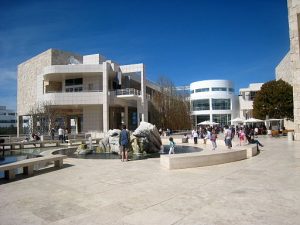
Roman Fuchs CC BY-SA 3httpscreativecommons.orglicensesby-sa3
There is energy in the Getty’s rarefied air, the energy that clearly reflects LA’s sustainability movement. LA is in action and proud of it. We are a mega-city with mega-goals in energy, water, buildings, and transportation to be sustainable. The conference reflected huge accomplishments in energy and mobility and water… and yes, continuing and highly daunting challenges… and deep optimism for technology and innovation and collective intelligence. Wow. That’s LA.
Our new Secretary of California’s Natural Resources Agency, Wade Crowfoot, would say it well later in the day: “Angelenos get it. The vision of mayor and county board is impressive. It would be one thing if it was a small city. San Francisco is a boutique city. LA is one of the largest metro areas in the world. LA is highly visible and highly respected and making progress at huge scale…. If you can pull it off, it will make a difference to the entire world.”
The City’s utility is headed by David Wright. To fulfill LADWP’s pledge to be off coal by 2025, “We have to reimagine our electric system. We’re looking at every resource.” LADWP’s FIT 150 program is now fully subscribed, the culmination of the nation’s largest feed-in tariff program. He’ll be going to his board for an additional 50 MW every year for four years. “FIT B” will include battery storage. In addition to utility-scale, solid-state batteries, LADWP is evaluating compressed air storage and a novel pumped storage scheme at Hoover Dam. Meanwhile it has a goal to install 25,000 EV chargers by 2025. It gave 1,500, $500 rebates for chargers in the past year. LADWP also provides rebates for used EVs.
LA’s Mayor Eric Garcetti is a motivator. He’s coined a new term related to climate change and our response: “anxitement”… a combination of anxiety and excitement. Garcetti talks about three types of citizen action related to climate: Those that are Future-Phobic (afraid of it), Future-Passive (let it be), and Future-Guiding (make it happen). To this, Lynn Jurich, CEO of Sunrun, added Future-Fast! We have to go faster was a conference theme, and Los Angeles has the solutions. And we take more steps: Mayor Garcetti has ordered that all wastewater discharges to the ocean must decease by 2035. That’s radical… no more outflow from the massive Hyperion plant.
The conference was buoyed with optimism. But challenges still loom large… from homelessness to equity. And another challenge was added: “We’re not a real city until I can get here [to the Getty] by subway,” said Assemblymember Laura Friedman. Despite huge gains in mass transit, “We have to be much bolder and to move much faster.” And we will.
Throughout the day at the Getty, the theme was reinforced that LA is the epicenter. We have the tools. We can tackle this. We have the technologies. We have storage with huge declines in cost. We can solve this; we just have to do it. The industry can offer solar plus storage at the same price as gas plant.
It’s OK to close LA’s gas plants. It’s cost effective today. That’s a huge step forward to decarbonizing and stabilizing the cost of electricity. Tom Buttgenbach of 8minuteenergy summed it up, “The market is or friend on this. It allows us to go faster…. LA is the beacon to the world. We can be what Silicon Valley was to computer world. The model, the approach, will be emulated across the country.”
Quote of the Day
“My friends, we are up for this! Our grandparents survived great wars, got us to the moon, brought water to this great pueblo… now it is our time.”Los Angeles Mayor Eric Garcettion rising to the climate change challenge
Water, Water Everywhere!
 The big news in California is that there is water, water everywhere! California suffered historic drought from 2011 – 2017. Now the reservoirs are filling up and the snowpack is deep. And our leaders state that, “We will not be flat-footed another time.” To be clear, this year’s condition of rain and snow is a consequence of the impacts of climate change. Climate leaders tell us that we can expect intensive drought followed by unusual precipitation.
Jeff Kightlinger is the General Manager of Metropolitan Water District. His agency provides water to 19 million people. He recounts that ten of last 12 years have officially been drought years, five were Governor-declared emergency years. Then 2016 was the driest year in over 12,000 years.
Two of last 12 years have been wet, 2011 and this year. We’re filling reservoirs with record amounts of water. And the good news is that people are not relaxing. Kightlinger reports that some years ago, two in ten of us saw water issues as significant. Now its 8 – 9 of us that recognize how critical water resources are to our society. MWD doesn’t see people bouncing back to their old water habits. That’s good, because we need to be prepared for more drought.

Gary Gero is LA County’s first Chief Sustainability Officer. He used the Summit to announce the County’s Sustainability Plan… a template and plan for all 88 cities and unincorporated areas. The Plan includes regional targets, for instance to ultimately source 80% of our water locally. As Gero noted, “Many resource issues are not city specific issues, they are regional issues.”
“It’s not waste until it’s wasted.” This statement relates to wastewater and the Mayor’s directive to cease all of LA’s wastewater discharges by 2035. That’s radical. No more wastewater. We have the technology to treat it… some 560,000 acre feet of water per year at Hyperion. Right now one third of Hyperion’s water is used by West Basin, but 150 million gallons a day are sent from Hyperion into the ocean as “wastewater.” This will change.
California’s Great RPS Success
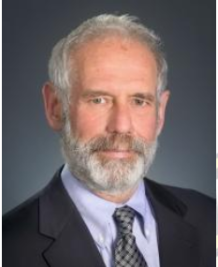
Michael Picker
President of the California Public Utilities Commission, Michael Picker, was pleased to report on the results of California’s Renewable Portfolio Standard (RPS). It is most certainly working. Each of the State’s regulated utilities has been mandated to buy renewable power… and lots of it!
Wildfires Threaten Sustainability
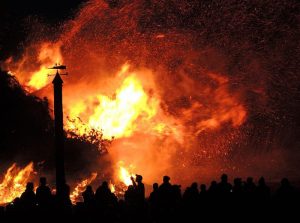 Michael Picker shared not very comforting thoughts related to sustainability in his opening remarks. We may well be in a different kind of climate denial. “We may have ignored the fact that we have slid into the very dramatic effects of climate change.” Bankrupt due to the wildfires, PG&E is one of the largest business victims of climate change. And Picker believes that there may not be simple technical fixes to address the ferocity of the fire storms.
Who is to blame when utility infrastructure failure causes a fire? Traditionally, fires caused by electrical failures were relegated to a couple of acres. Given drought conditions, intense heat, and high winds these have now these burst into 200,000-acre wildfires. We used to have contained forest fires. Now we have wildfires with millions of homes in wildfire risk areas.
Wade Crowfoot said that Southern California is particularly vulnerable to fires. We have lots of people living in the wildlands urban interface. And the nature of wildfires is changing, intense winds pushing embers up over the fires to distant eaves where they ignite homes and neighborhoods. Santa Rosa proved that even inner urban cores are not safe nor exempt.
For Governor Newsom, wildfires is topic number one right now in Sacramento. Governor Newsom ranked the most vulnerable communities in California; Calfire developed list of top 200 based on fire risk, access, and age.
The solution transcends utility regulation. In the meantime, PG&E has had to file for bankruptcy, a process that Picker expects to involve almost a billion dollars in lawyers’ fees. Picker said that, “Our job is to protect the ratepayers. Everybody will take a hair-cut.” He presumes that we do think it is important to have an “investable utility.”
California Assembly member Chris Holden chairs the Utilities and Energy Committee. He explained the key role of legislators in preserving California’s major utilities to maintain our climate action goals and progress. The 2018 Camp Fire put PG&E into bankruptcy.
He stressed that we don’t want to see this happen to the other investor-owned utilities. The California legislature can take action to maintain goals, but to achieve them we need to make sure that we have healthy utilities.
Holden is concerned about the credit worthiness of the other two investor-owned utilities. Even if they were financially secure, he says it’s hard to feel confident that they will achieve the 100% carbon free goal by 2045. Getting to 60% by 2030 will be a challenge. The low-hanging fruit has already been picked, so assuring that utilities are stable and continue to invest to reach our goals is very important. Holden stressed the need for a solution, perhaps a back-stop fund to give assurances to bond raters.

“Can I be real?” asked Holden. He explained that in reality there is no plan in time for the next wildfire season. Yes, solutions are viable and making their way through the legislative process. We need a more holistic means of addressing wildfires, including where we build and how we build. The Governor is putting another $100 million in preventive measures and forest management. There needs to be a de-energization bill with protocols for how to address those who choose to live in high-risk fire areas, at times with no insurance.
Chris Thompson is Edison’s VP for Local Public Affairs. He’s a strong energy and voice of reason. California has very recently experienced six of ten most destructive wildfires in its history. In cases, the electric infrastructure has been the source of ignition. Build-up of vegetation, drought, high winds, and error are causes of intense fires. Even the Getty, where we all sit on this glorious spring day, was threatened in 2017. And fires have broader effects. San Francisco had the worst air quality in the world because of the Camp Fire many, many miles away.
Mitigating Wildfire Risk
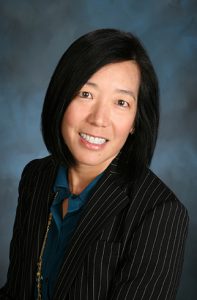
Caroline Choi
Edison’s VP for Customer Service, Caroline Choi, is forthright and refreshing in her delivery and enthusiasm. She plays a motivational video that delineates the choice we have to make as a society. How we tap and use energy is a fundamental choice. In terms of climate, Choi believes that the new normal is really the new abnormal. “The effects of climate change are not in the indeterminate future. We are experiencing them now. Climate change is out of the proving stage.” Choi talks about the operational piece, how Edison’s 12,000-person workforce operates in this new abnormal.
Edison is mitigating fire risk in many ways: It is replacing bare wire with insulated wire in the 30% of its service territory deemed high-fire risk areas. So far it has 600 miles of these covered conductors in process, with another 3,400 miles to come. Edison is also replacing wood poles with composite poles there. Edison is carrying out more aggressive tree trimming. Extreme condition tactics include “public safety power shut-offs.” Last year, Edison deenergized three local circuits.
Edison is deploying 850 local weather sensors. The utility now has a 24*7 weather center with a team of meteorologists to guide power system operators. Edison is also placing high-definition cameras in high-risk areas. By the end of this year, Choi reports that Edison will have 90% of coverage in these areas, with 160 cameras that spin and zoom, and whose output will be made available to public. Another project involves modelling to determine where underground infrastructure is needed. Another involves creating resiliency centers at schools that will be open to their communities during prolonged outages.
Coping with wildfires requires macro thinking. As a society we need fire-resistive building codes, and incentives to discourage building in high risk areas. To reduce risks, different regions will need to require different mitigations. We need to identify target areas where residents are most in danger.
The Sunrun Solution
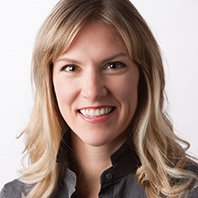
Lynn Jurich
Lynn Jurich is the young and vibrant founder and Chief Executive Officer of Sunrun. This past year, LA Mayor Eric Garcetti pledged not to repower three of LA’s aging natural gas plants. She used her pulpit the Getty to offer LADWP a renewable power solution to replace the plants’ capacity. Sunrun will be pleased to deliver sufficient carbon-free distributed energy, quickly!
Jurich started Sunrun with a classmate at Stanford 12 years ago. She explained that it’s a transformative model, shifting our power infrastructure from centralized and monopoly-based to a competitive, more individualized system. Sunrun has financed over $4 billion in solar so far… serving 250,000 customers with energy independence. She smiles: “Solar is universally attractive, and very American. People get excited about this.”
Jurich’s proposal to the City of Los Angeles, presented on the Getty’s massive projection screen, is to replace gas plants with rooftop solar and storage. She proposes to create a virtual power plant made up of 150,000 homes and 500 apartment buildings. To put this in perspective, she stated that 2.5% of homes in Los Angeles currently have solar. San Diego is at 11%. If we get to San Diego’s level, we’ve got it… a distributed and cost-effective, carbon-free solution.
 Further, Sunrun proposes to pay each homeowner $4,000 to install a battery in their home. Each homeowner would make a pledge to the utility to allow its capacity to be dispatched at critical periods. The network of storage would be cheaper than a transitional natural gas power plant and dispatchable not only in concert but localized as needed to support the local distribution system. “The math works…” Jurich said. There’s no up-front cost and when the grid goes down, these homes are safe places for family and community. Recently, Sunrun competed and won in the New England in energy auction, providing capacity from 5,000 homes.
Then Jurich took it further, and it struck me: “Consumers already want this. Instead of rebuilding utilities, there is another infrastructure being built on the grid edge, and we need to talk,” she warned. Otherwise we may overbuild… doubling up with both distributed and utility resources. Distributed energy resources’ cost curves continue to improve making them more and more competitive with grid resources. And being labor intensive, they create lots of local jobs now. “We can move quickly on a roof, often putting up a system in a single day.”
Los Angeles Mayor Eric Garcetti
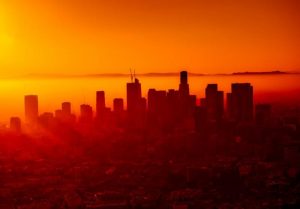 Eric Garcetti states with pride that, “We’re creating the workforce of tomorrow!” “Climate change is our generational challenge, moral imperative, and a massive economic opportunity for Los Angeles.” “We know how to survive and we will find a way to survive.” Garcetti supports the Green New Deal in Washington. “They’re trying to figure it out at the national level.” Garcetti suggests that Washington look across the country to LA where we have already embodied a green new deal, where our sustainable city plan is based in economy, environment, and equity.
“Together we are setting the bar, you can see it on rooftops. Since I have been mayor, we have created 35,000 green jobs in LA. Our city, representing 1% of the nation’s population, has cleaner air and a stronger economy. In 2016, we had an 11% drop in carbon emissions. We’ve met clean air targets five years ahead of schedule.” Now one of our goals is to create world’s first zero emissions port. No one has ever tried this before.
“Our goal is to be Future-Guiding… to be the architects of the future and to demonstrate national and global leadership.” Garcetti founded the Climate Mayors that today represent 70 million Americans in 400 cities. “We’re in,” is a rallying cry. Garcetti underscored that power does not come from Washington. It comes to Washington from us. We drive the market, for instance through the EV purchasing collaborative. We drive the market, for instance LA’s pledge for emission-free buses by 2025. We drive the market… spurred by Measure M, the largest transportation infrastructure measure in America.
LA’s Green New Deal just gets greener and greener. We’ve pledged to be a carbon-neutral mega city by 2050. LA is the third largest megacity after Tokyo and New York, and the most productive per capita megacity, we are 22nd largest in terms of population. Now we are poised for every building to be net zero, for the entire power grid to be carbon-free, to recycle 100% of what we used to call “wastes,” and to recycle all wastewater. It’s all about cool roofs, cool streets, and careers for a lifetime that are powering our economy to new highs.
The Clean Power Alliance Update
 Ted Bardacke is the head of the Clean Power Alliance (CPA), the largest of California’s 19 community choice aggregation (CCA) providers. The CPA now has nearly one million customers and in a matter of months has become the fifth largest load serving entity in the State. CCAs promised to bring greener power to consumers sooner. The CPA is showing that it can be done!
Of its customers, 275,000 are on 100% renewable energy rate plans. They come from ten cities that resolved for their citizens to buy 100% renewable power in 2019. Since not everyone can pay, Bardacke explains that in those 10 cities, low-income customers are getting 100% renewable power at no additional cost. That’s an internal subsidy of $5 million. Meanwhile the CPA is negotiating for 800 MW of new capacity, much of it solar plus storage. It’s the first CCA to invest in stand-alone battery storage.
CCAs can be more than electricity providers. The CPA is taking a close look at how traditional power plants ramp up. Bardacke explains that it’s during the afternoon ramp that most emissions are released. The faster that the ramp happens, the poorer the air quality. He says that CCAs can make investments in those ramps and will have really demonstrable impacts.
McAllister’s Net Zero Buildings
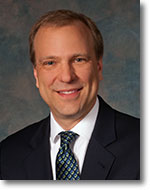
Andrew McCallister
CEC Commissioner Andrew McAllister is the State’s chief advocate of net zero energy buildings. In fact, he’s just about to move into his own all-new, all-electric demonstration home in Davis. Thanks to Commissioner McAllister and his colleagues, all new homes in California will be required to be net zero by 2020; all commercial buildings by 2030.
McAllister speaks at conferences throughout the State, and throughout the country. He reports that, “The rest of the country just scratches their head. How did California make the new building code happen? What’s required is a shift inside all these buildings… to heightened levels of energy efficiency and onsite generation. These big and bold initiatives are truly transformative and are leading the nation.
McAllister explains: Since the mid 2000s, California has had the ZNE policy goal. “Small is beautiful!” For many years, this goal seemed very far off. But now it’s the law and now the CEC and others are focusing not just on ZNE (zero net energy), but now ZNC (zero net carbon). The policy regime is now focused on carbon: “How do we wean our building stock from natural gas? The natural gas infrastructure is a huge sunk cost that ratepayers will be on the hook for. What is role of renewable natural gas? The gas regime is really going to have to change.”
There are now more than 400,000 clean energy jobs in U.S. today. Distributed energy resources are labor intensive, more so than the traditional utility infrastructure. McAllister reports that the edges to monopolies are beginning to break down. “I envision the quality of our lives increasing tremendously.”
Corporate Leaders: WalMart and JP Morgan
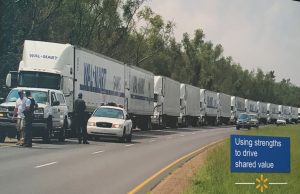
Walmart trucks line up with supplies in New Orleans after Hurricane Katrina
WalMart was well represented by Javier Angulo, its Senior Director Community Relations. WalMart has three sustainability goals: 1. Zero Waste; 2. 100% Renewable Power, and 3. To sell products that sustain resources and environment. So far, so good. The company generated billion kWh of renewable power last year at 520 projects around the world. In terms of efficiency, WalMart installed more than 1.5 million LED fixtures in more than 6.000 stores. The company has achieved a 13% reduction in energy use since 2010.
Project Gigaton was launched in 2017 to get WalMart suppliers to follow suit. It’s a “Corporate America moonshot” to save a gigaton of carbon. But already 400 suppliers have signed on to project and more than 200 suppliers reported reductions of 20 million metric tons in the first year! The program has now been expanded to the United Kingdom, China, and Sri Lanka.
JP Morgan Chase’s Kristina Nilsson told a similarly impressive story. JP Morgan Chase is the largest U.S. financial institution. It has a major focus on sustainability both in terms of business targets and operational objectives. She presented the company’s two goals: Facilitating $200 billion in clean financing through 2025, buying 100% of its power from green sources by 2020.
By the end of 2018, JP Morgan Chase has $100 billion financed, and is now buying 20% renewable energy… well ahead of own goals. Morgan is financing the disruptors and unlocking capital at scale.
Welcoming California’s Wade Crowfoot
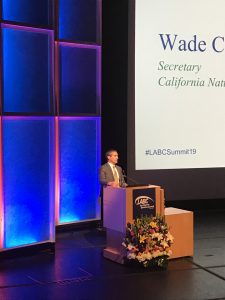
Wade Crowfoot
Wade Crowfoot received a very warm welcome as the newly appointed Secretary of the California Natural Resources Agency.
He began his remarks with success: California is leading the world in terms of climate action and sustainability. We’re the fifth largest economy with 50% energy now carbon free when you factor in large hydro. Half of all EV sales nationally are in California. While President Trump moving away or attacking environmental protection, California is doubling down!
Crowfoot went on to say that greater LA is leading California… with investments in transportation, parks, and water that are the envy of the State.
While leading, the State faces huge challenges. We have major economic and social problems, income inequality is expanding, and homelessness is more visible than ever. Crowfoot talked of the heartbreak that his four-year-old daughter is conditioned to seeing homeless on the streets. Southern California has some of the most park-poor communities in the state.
Adaptation was once “a sleepy wonky issue, a conceptual planning exercise to address impacts decades into the future.” But now climate change is taking lives… nearly 800 lives were lost in Paradise. We have to address vulnerable communities that face peril due to drier forests. The fires emitted so much carbon in the last two years that all AB 32 savings were wiped out.
The Golden State’s successes are tempered by the challenges we face. There are no easy solutions, but millions of Angelenos get it: Economic prosperity need not be in conflict with environmental protection. As Californians, our sleeves are rolled up, all hands are on deck effort. It’s a huge challenge but one we can face.